
The smartphone has become a major shopping tool in France: three in four online shoppers use one to buy, and half of the most recent fashion purchases are made on it. The figures below are sourced and dated; they describe habits, not your store's sales. Their value is to show you what to check in your own data.
The figures to remember
| Figure | What it measures | Source |
|---|---|---|
| €196.4 billion | Online spending in France in 2025 (products and services), up about 7% year on year | Fevad, 2025 review published in February 2026, reported by Siècle Digital |
| 76% | Share of online shoppers who use a smartphone to buy (84% use a computer) | Fevad and Toluna Harris Interactive, February 2026 |
| 95% | Share of 18 to 24-year-olds who shop online on a smartphone | Same survey |
| 52% | Share of the most recent fashion purchases made on a smartphone (38% on a computer); 51% for sport, 50% for everyday groceries | Same survey |
| About three quarters | Share of mobile in the online traffic observed by Salesforce worldwide (visits, not orders) | Salesforce, July 2026 |
| 70.22% | Average cart abandonment rate, all devices, calculated from 50 studies | Baymard Institute, updated September 2025 |
The Fevad survey was carried out online from 8 to 12 January 2026 among 1,026 online shoppers aged 18 and over. The other figures come from different sources and scopes: they cannot be added up or compared with one another.
What these figures really say
Smartphones are for buying, not just browsing: in fashion, sport and everyday groceries, half of the most recent purchases are made on them.
Customers move between screens: computers are still used, but half of fashion, sport and grocery purchases already happen on the phone.
Younger shoppers buy almost entirely on mobile: if your customers are young, the phone journey is your main journey.
Mobile brings the visits, checkout makes the sales: with three quarters of traffic on phones, every obstacle at payment costs you orders.
What a PrestaShop merchant can take from them
Start with your own figures, in your analytics tool: share of visits and orders on smartphones, conversion rate by device, the checkout step where mobile visitors drop off.
If smartphone visits convert much less than computer visits, work on mobile checkout: see five fixes to test against cart abandonment.
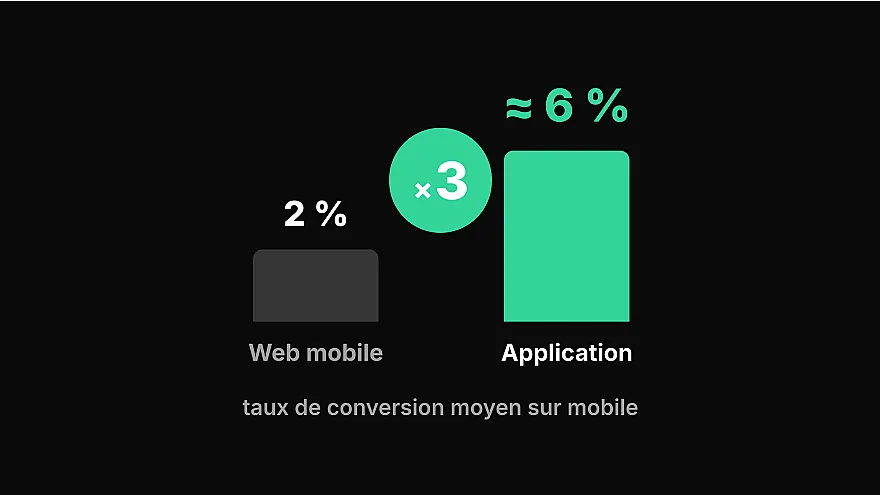
If some of your customers buy often, an app gives them direct access to your store from their home screen. See how to measure its effect on conversion.
To choose between a website, a PWA and an app, read our comparison of mobile formats.
Prestafy adds a branded iOS and Android app to a PrestaShop store, connected to its catalogue and orders. See how to turn your store into an app, then design and preview it for free.